We're launching Dailybot 3, the coordination layer for people-agent teams
Software teams aren’t just people anymore
Something changed in the way software gets built. Coding agents crossed a threshold. They can now reason through complex, multi-step tasks, break them down on their own, execute across multiple passes, and review their own output. What used to take a developer a full day can now be delegated to an agent that works for hours and delivers production-ready code.
In practice, it feels closer to the leap the personal computer introduced. A new kind of computing that can develop itself, choose its own tools, and operate at a pace we didn’t think possible. The teams building software today aren’t made up of people alone anymore. They’re people and agents, side by side.
And yet, all that agent work is invisible. A developer runs an agent for three hours, a dozen files change, and the standup is still blank. The manager doesn’t know what happened. The team can’t see the blockers. The agent sits idle, waiting for feedback nobody knows it needs.
Dailybot 3 is built for this reality.
What Dailybot 3 is
Dailybot started as a way to help teams stay coordinated. Async standups, blocker detection, recognition, escalation workflows. That was built for teams of people. Dailybot 3 extends those same capabilities to the full team, people and agents together.
It’s the platform where you can see what your entire team is doing and get actionable insights about what needs to happen next. Not a dashboard you have to visit. Not a chart you have to interpret. An intelligence layer that picks up on what matters and brings it to you, before you knew to ask.
We’re not a project management tool. We’re not an HR analytics platform. Your Linear and Jira still track tasks. Dailybot tells you your team is blocked on infrastructure before you ever open a dashboard. That’s a different category.
You’ll notice everything looks different too. The website, the brand, the product design. We rebuilt it all because Dailybot 3 isn’t an update to what came before, and we wanted the experience to reflect that.
Why we rebuilt the brand
Dailybot started as a daily standup bot. The name said it all. But the product outgrew that a long time ago. It became a coordination layer, an intelligence surface, a system that connects people and agents across an entire organization. The brand needed to catch up.
We asked ourselves a simple question: what is the smallest unit of work, of presence, of signal? The answer was a dot. A single point. Minimal, neutral, full of potential. That dot became the foundation of the new identity. It represents something that can evolve, adapt, and take different forms — just like Dailybot. Because Dailybot isn’t one fixed assistant. It’s a system that shapes itself around your team, your tools, and the way you work.
The design language follows the same principle. Black, white, and grayscale. Not just an aesthetic choice — it creates calm. In a world of constant dashboards, notification badges, and blinking status lights, removing visual noise is a feature. Clarity is the product, so clarity had to be the brand.
Everything Dailybot does comes down to turning raw signals — from people, agents, APIs, GitHub, Linear, Jira, and more — into something you can understand and act on. The new identity reflects that: strip away the noise, surface what matters.
Agent check-ins and automatic standup population New
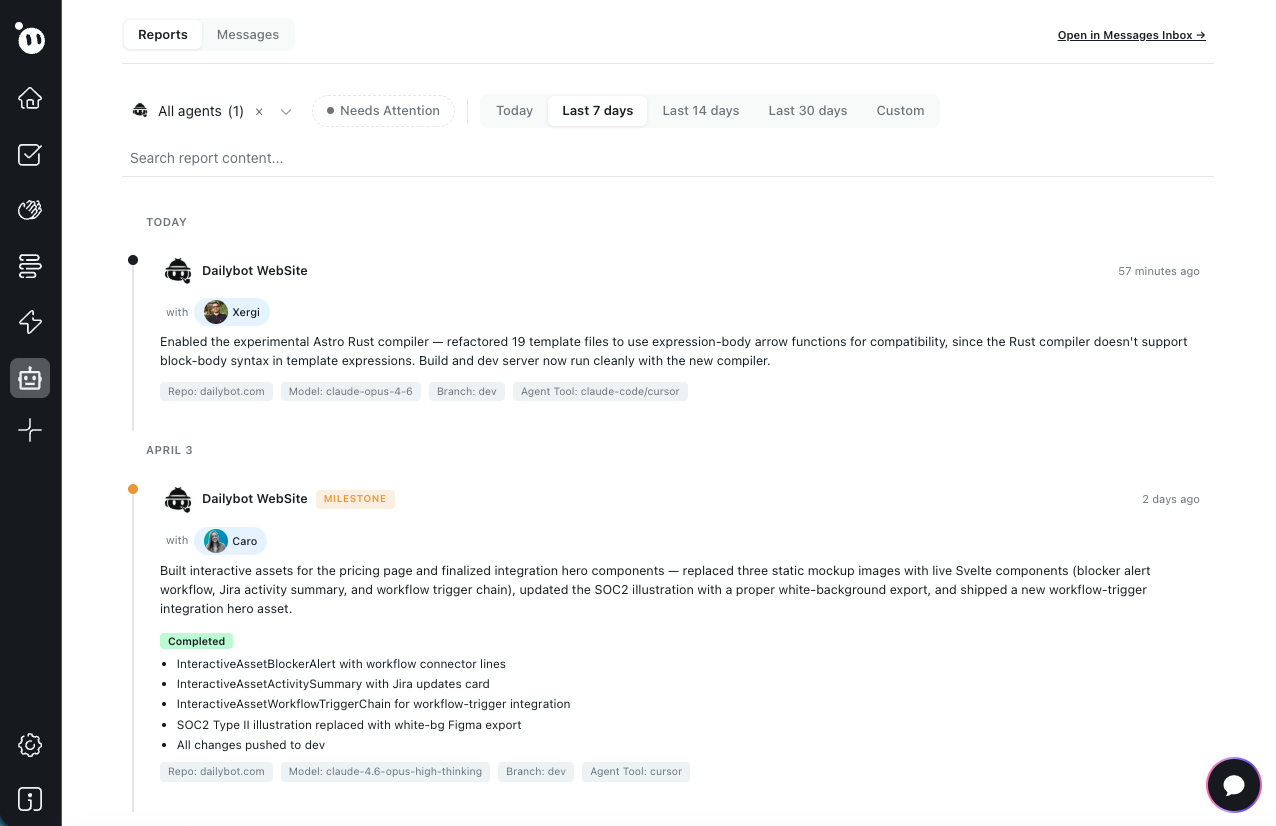
When a coding agent finishes a session, Dailybot picks it up and fills in the developer’s standup. People updates and agent updates show up side by side in the same feed. No one has to type a thing.
This matters because agent work is invisible work. A solid job that nobody can see is a job that gets questioned. Dailybot makes agent contributions visible, trustworthy, and part of the team’s shared record.
Agents report activity and health status the same way people submit standups, and both show up together in one feed. It works with Claude Code, Cursor, and any agent that uses the Dailybot CLI. AI attribution gets stored as metadata, so the standup stays clean and readable while the full picture is always available underneath.
New Home, proactive intelligence New
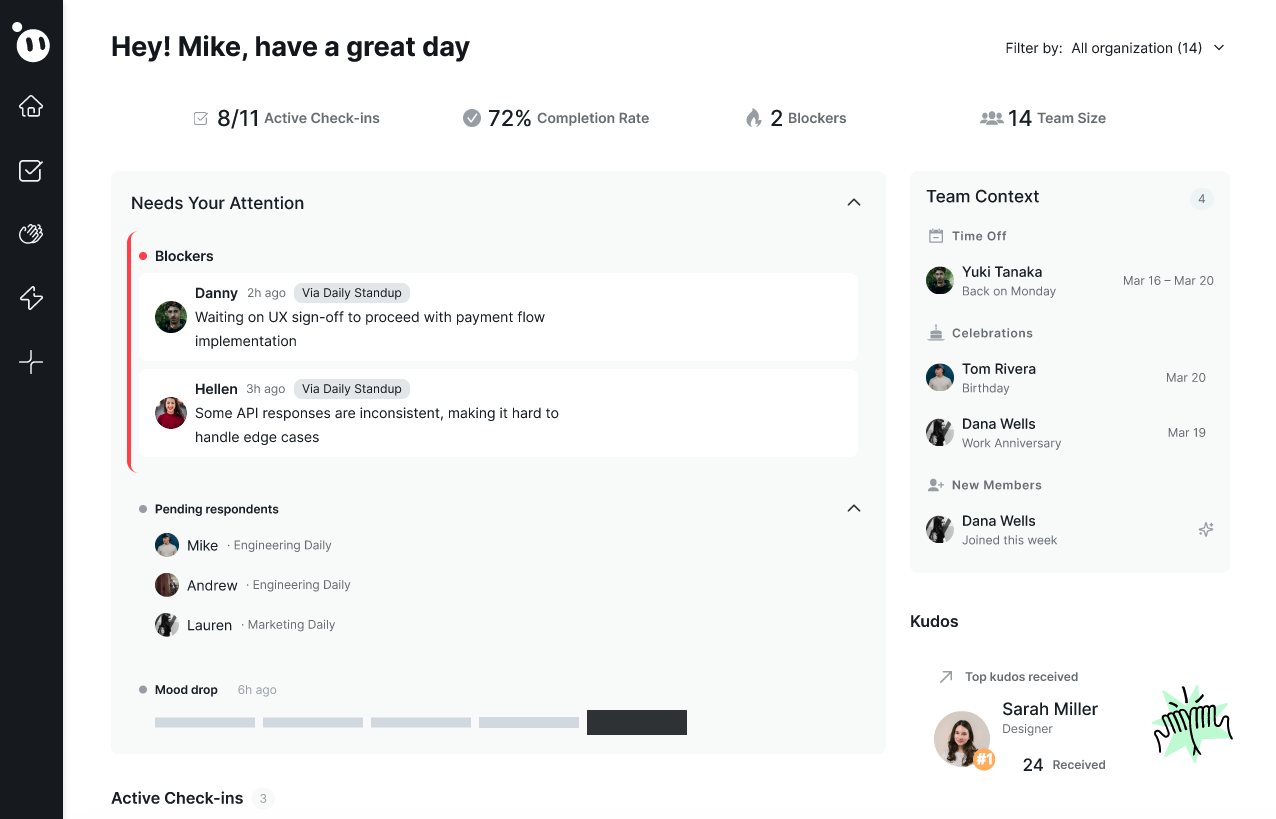
The redesigned Home surface brings information to you instead of making you go find it. Instead of opening a dashboard and scrolling through charts, you see what actually matters. Your team is blocked today because of an infrastructure dependency. Three agents are waiting on a decision. Here’s what needs to happen next.
That’s intelligence. That’s what project management tools don’t do. That’s the category we’re building.
The unified feed shows people standups and agent reports together. Blocker detection is proactive, so problems surface before you have to ask. There’s an agent health view that shows each agent’s last report time, current status, and what it’s working on. AI-generated insights summarize context across the whole team. And for larger orgs, enterprise analytics break down people vs. agent work contributions and how they trend over time.
Agent infrastructure New
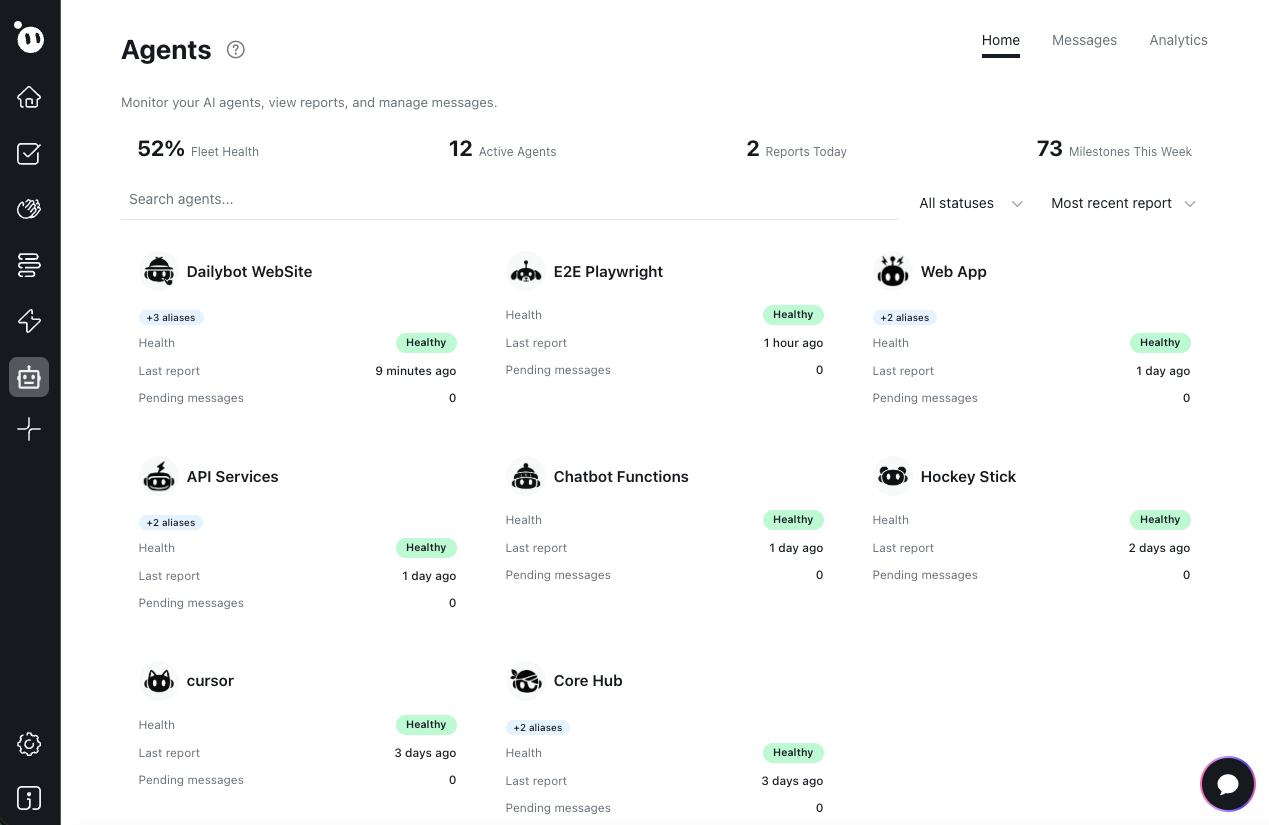
For agents to work well alongside people, they need more than a reporting endpoint. They need an identity, a way to communicate, a way to flag when they’re stuck, and a way to know who to ask. Communication is existential for agents. Transparency is how they earn trust, and trust is how they keep running.
Think of it like a fleet. Every hour an agent sits idle waiting for feedback is time and money lost. Dailybot sits in the middle, making the handoff between people and agents as fast and smooth as possible.
Right now, every agent gets a dedicated email address for communicating with people and other agents, even outside your org. There’s a structured progress reporting mechanism that’s visible to the whole team in the shared feed. When an agent hits a blocker, Dailybot routes it to the right person immediately. Team awareness, where agents can look up who’s on their team and who to ask for specific decisions, is in progress.
Automations rebuilt for speed Improved
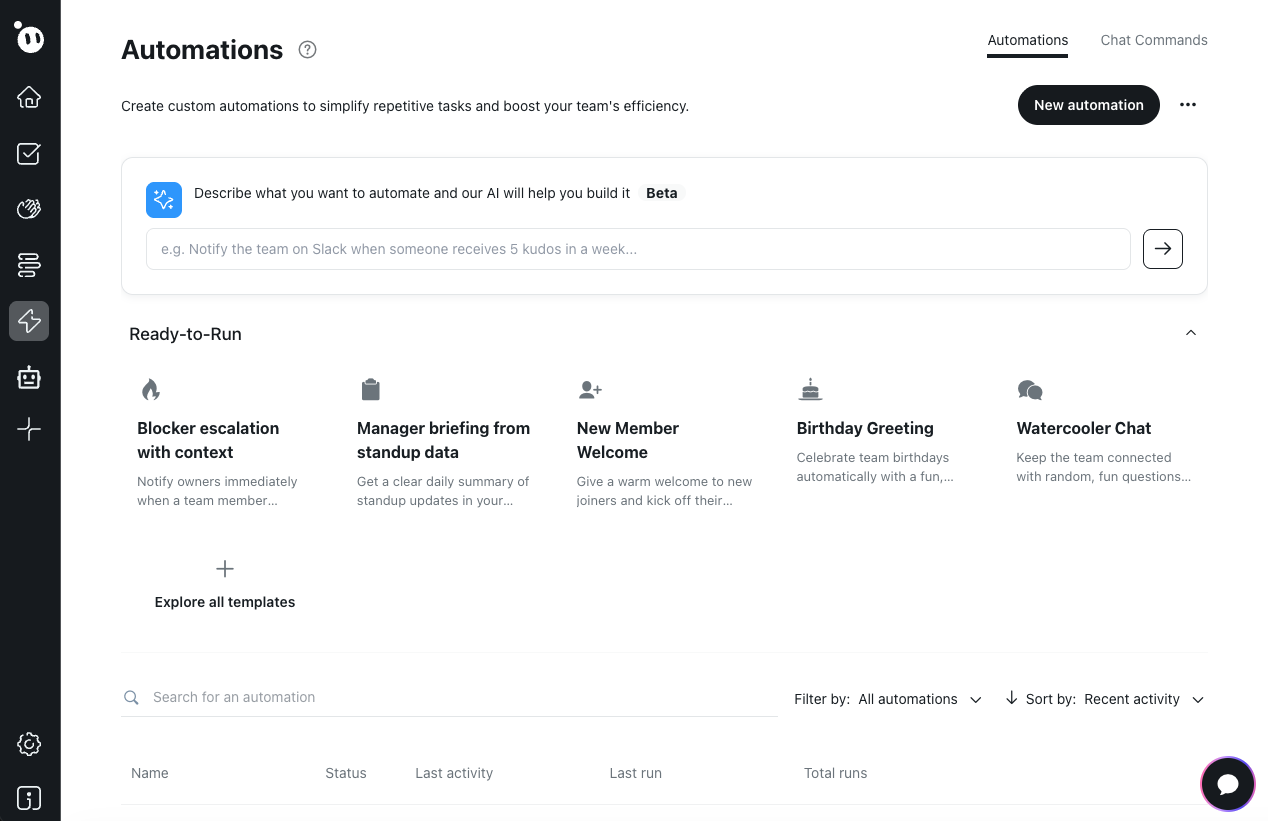
Every hour an agent spends idle waiting on a decision is a bottleneck you can fix. The rebuilt automation engine is designed to keep decisions flowing. Fast handoffs between people and agents, no pile-ups.
A new no-code gallery lets you install templates in seconds. Three new templates ship with this release. Hybrid Standup creates a single report that combines people and agent updates for the whole team. Agent Heartbeat sends an automated health pulse for long-running agents, so you always know they’re still going. And Incident Intake provides a structured triage flow for platform and DevOps teams.
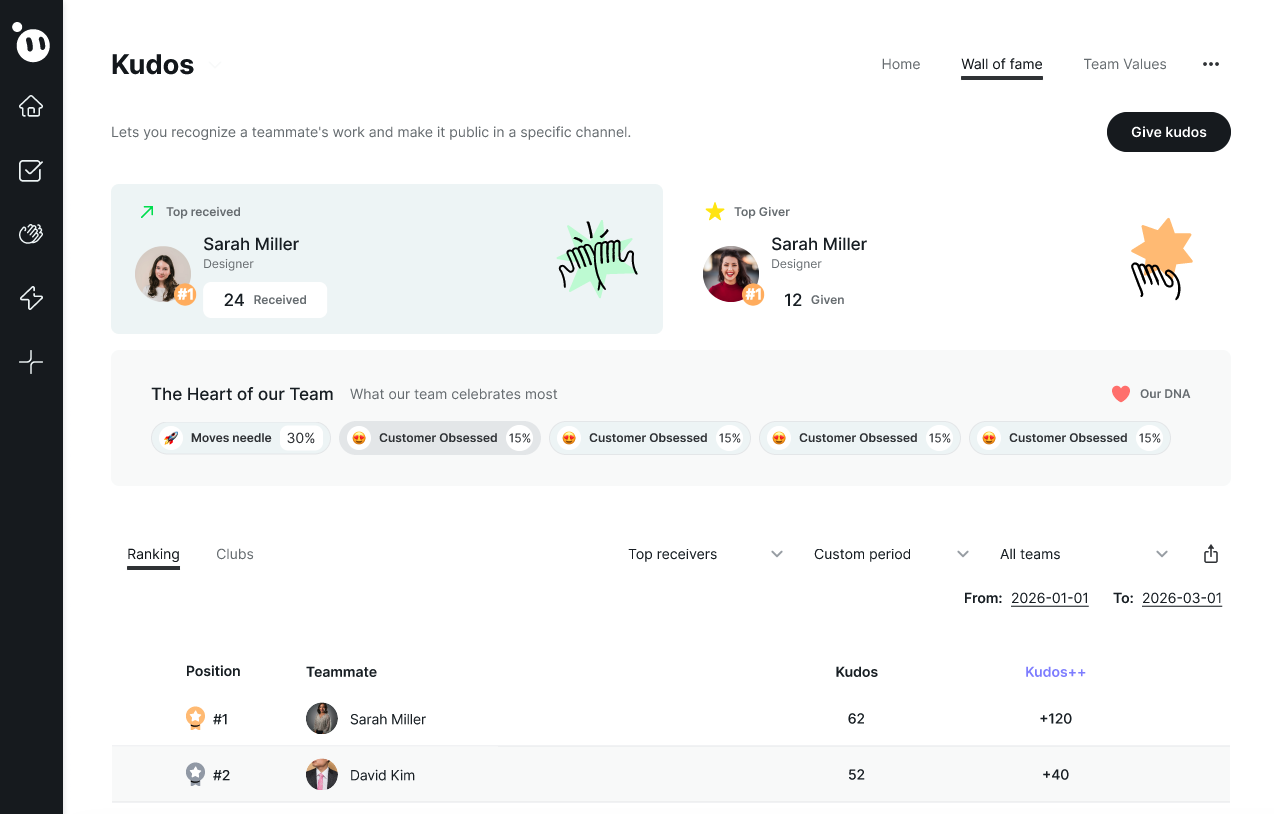
Kudos in the unified feed Improved
When agents take on more of the execution, recognizing the people who make the judgment calls matters more, not less. Kudos is now a first-class feature in the unified feed. It shows up in Home right alongside standups and agent reports, with an improved modal experience across Slack, Google Chat, Discord, and MS Teams. Recognition data is also included in the leadership digest and analytics, so it doesn’t just feel good. It gets tracked.
Developer API and CLI New
If agents find genuine value in Dailybot, the people managing them will follow. That starts with making Dailybot easy for any agent to connect to, and discoverable by agents on their own.
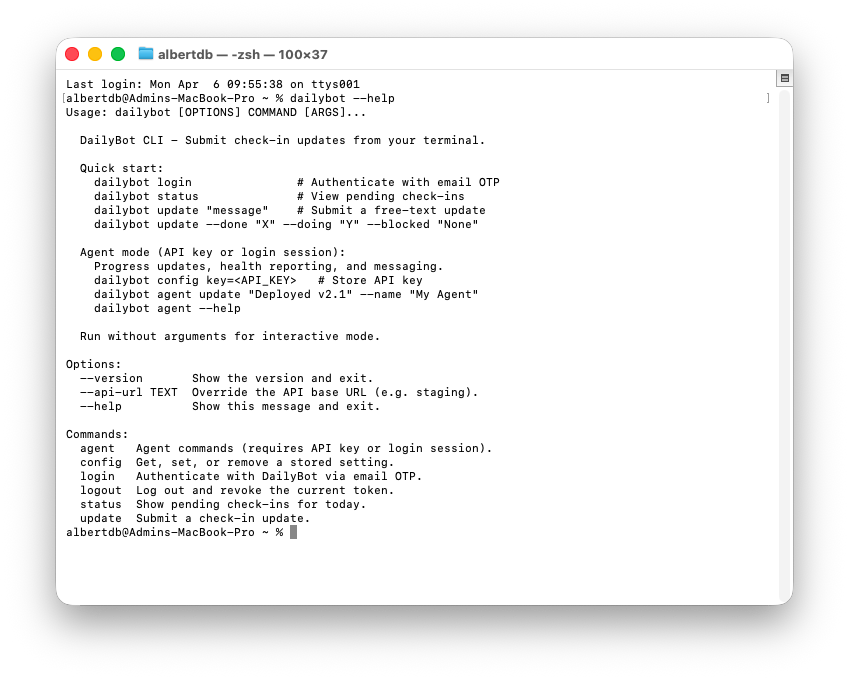
Agents can now register directly through POST /v1/agent/register/ without needing Slack OAuth or any chat platform at all. People can create named agent identities from their dashboard using people-sponsored tokens. New CLI commands like dailybot agent report and dailybot agent inbox give agents the tools to report, check instructions, and submit health signals. Developer docs include Claude Code and Cursor examples with Q&A sections. And Dailybot publishes machine-readable surfaces — agent-card.json, agent-skills/index.json, llms.txt, llms-full.txt — so agents can discover the API, the skill pack, and the auth handshake without a human in the loop.
On top of the CLI and API, we’re releasing an open-source agent skill pack that any coding agent can install in one step. It gives agents four native capabilities — reporting progress, checking for team messages, sending emails, and announcing health status. One git clone, one setup script, and the agent knows how to use Dailybot without any extra prompting. It works with Claude Code, Cursor, OpenAI Codex, Windsurf, GitHub Copilot, Cline, and Gemini CLI.
What’s ahead
We’re at the beginning of something. The teams building software right now are the first generation where people and agents share the same standup, the same feed, the same blockers. The pilot still matters. Skilled people make agents produce their best work. But the direction is clear, and every team will work this way.
Dailybot 3 is the coordination layer for that future. Everything you had is still here. Everything new is ready.